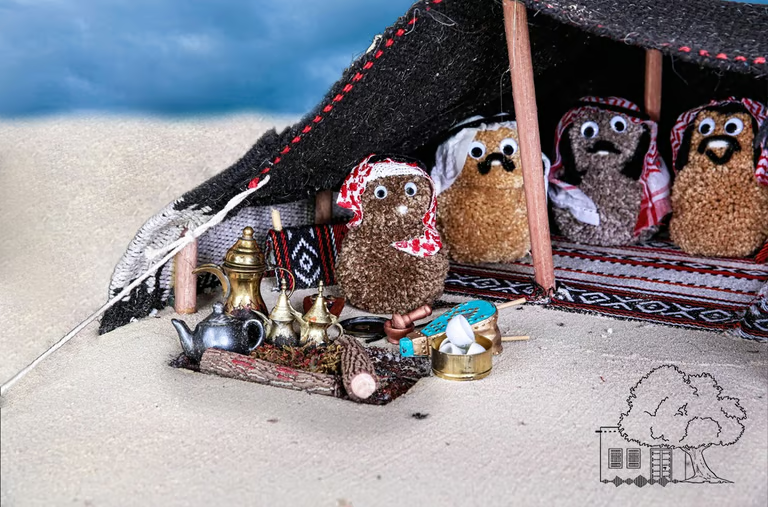
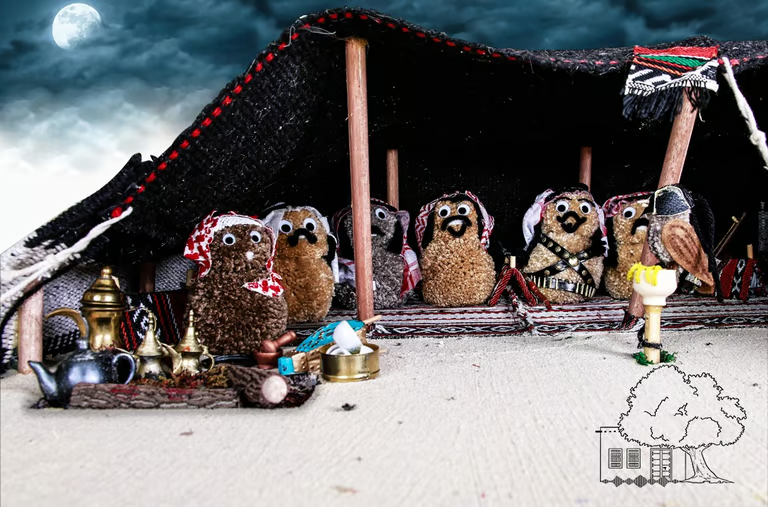
The tents of hair are among the most important shelters created by the Bedouins using traditional and technical methods. They are distinguished by their resistance to the harsh and changing desert environment, their lightness, and ease of maintenance. Bedouin women can repair these tents without assistance. The covering of the tent is made of "Sadu" weaving, which allows air to pass through in summer and prevents water leakage during rain. Smoke escapes through openings in the roof when fire is lit inside. The tent is rectangular in shape, open on one side and closed on the other, with partitions inside called "Qati‘". The preferred tent is woven from goat hair, but if unavailable, sheep wool or camel hair is used. Bedouin women weave the tent from "Shaqayeq" or "Faljan".
A thin stick used to clean and refine the hair, made from branches of trees such as Al-Awsaj and Sidra.
Two wooden pieces with handles and teeth used to clean hair from impurities.
A split wooden piece that helps Bedouin women in the spinning process.
A wooden stick with an iron head called "Sanara", used to twist and spin the hair.
A group of spun and twisted hair threads, resembling a ball but larger, used to produce Sadu.
The process of producing fabric after enough Dajjas are available, forming the basis of sewing the tent.
An iron tool resembling a needle but larger, about 8 cm long.
An iron piece similar to Al-Mikhyat but larger in size.
Ropes made from sheep, goat, or camel wool, used to tighten and secure the tent.
Iron stakes used to fix the ropes into the ground.
A small wheel made of iron or wood, facilitating the pulling of ropes during fastening.
Made from Athl or Talh wood, measuring 2 to 2.5 meters in length, used to raise the tent.
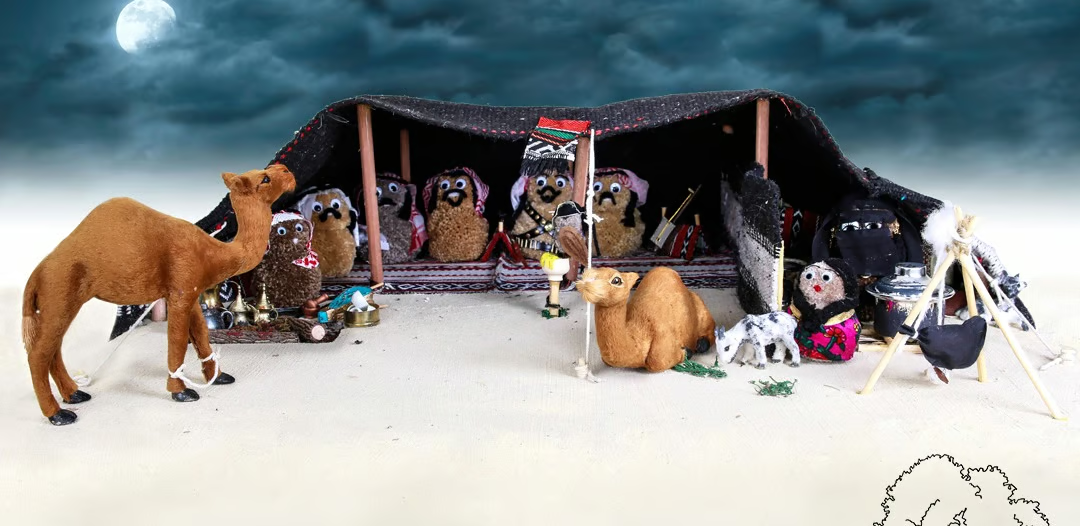
The tents of hair are among the most important shelters created by the Bedouins using traditional and technical methods. They are characterized by their ability to withstand the harsh and changing desert environment, their lightness, and ease of maintenance. Bedouin women can repair these tents without assistance. The covering of the tent is made of "Sadu" weaving, which allows air to pass through in summer and prevents water leakage during rain. The tent is rectangular in shape, open on one side and closed on the other, with partitions inside called "Qati‘". The preferred tent is woven from goat hair, but if unavailable, sheep wool or camel hair is used. Bedouin women weave the tent from "Shaqayeq" or "Faljan".
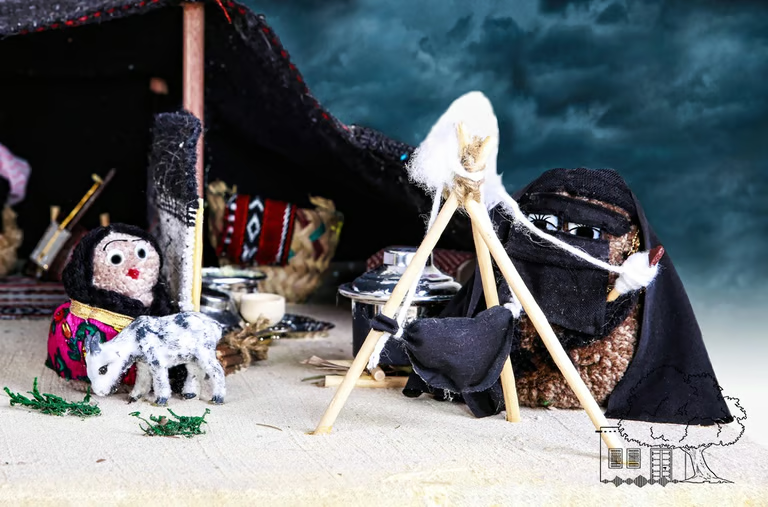
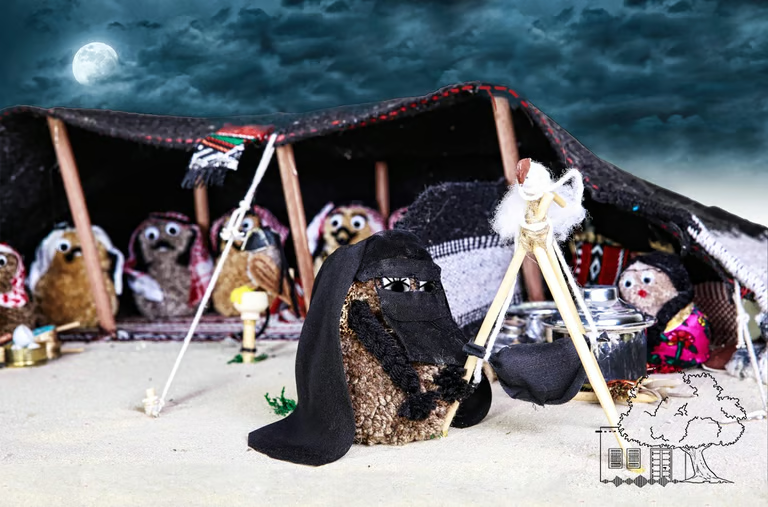
(Al-Sameel – Al-Sa‘n – Al-Siqa’ – Al-Qirba – Al-‘Ukkah)
Sheep skins are generally used for making Al-Sa‘n, preferably the smaller ones.
The sheep’s skin is carefully flayed, then cleaned of meat residues. After that, it is filled with a mixture of water, salt, and dates (Marees) and buried in sand for several days. The wool is then easily removed, the skin dried, and tanned with ingredients such as Arta, Athl bark, and Salam roots. The method varies by tribe.
- Al-Sameel or Al-Sa‘n for milk or water
- Al-Qirba or Al-Badra for water
- Al-Siqa’ for milk and butter extraction
- Al-‘Ukkah for ghee
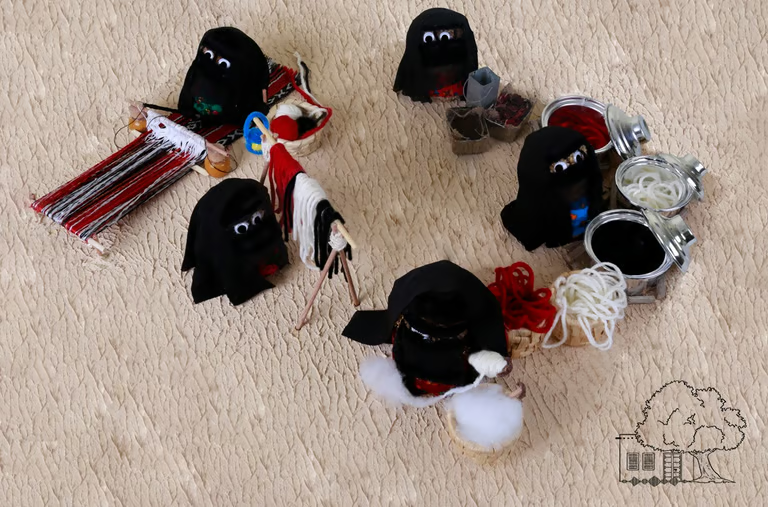
It begins with shearing sheep wool in spring and collecting camel hair in summer.
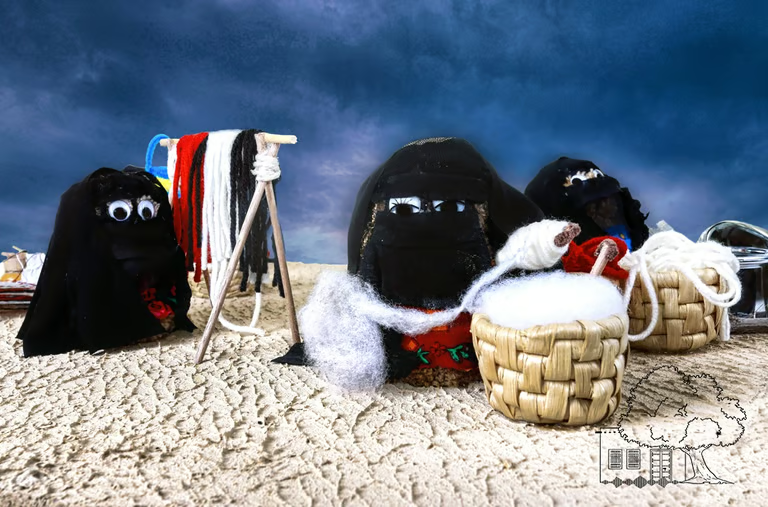
This process is carried out throughout the year using the spindle (Mighzal) or Tighzala.
After spinning, the white wool is dyed in various colors, traditionally extracted from desert plants.
Usually done in summer when the Bedouins are more settled, using extended threads tied to four stakes in a rectangular shape.
- Tents of hair: Bedouin dwellings
- Al-Qati‘: Internal partition
- Al-Riwaq: Screen against the wind
- Al-‘Udool: Bags for storing food
- Al-Mazawid: Smaller bags for storing clothes
- Al-Sanaif: Decorative threads for horses and camels
- Al-Zawali: Thick wool carpets
- Al-Busut: Mats made of twisted threads
- Al-‘Aqal: Threads for tying camels in their resting place
The craft of Al-Sadu is one of the oldest traditional industries. It was the main material for furnishings, cushions, and covers, and was also used in making tents and shelters.
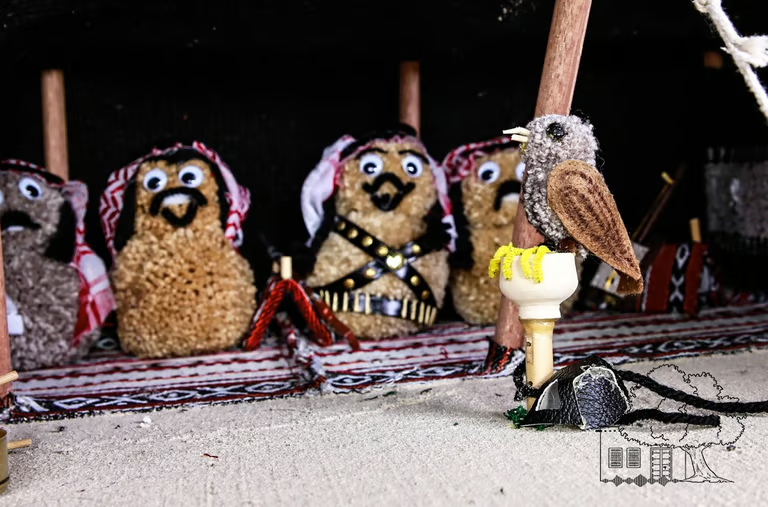
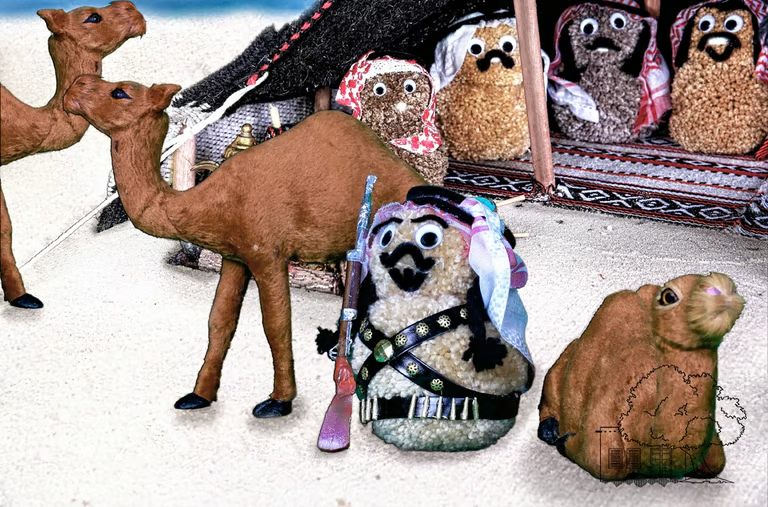
Hospitality is defined as honoring and being generous to the guest. It is an essential part of Bedouin life and a prominent aspect of their social traditions, for they became known by it and attributed to it. Hospitality is considered one of the hallmarks of Arab generosity and is obligatory for every individual, regardless of what he possesses, whether little or much. The Bedouin man is very keen to preserve the conditions of hospitality and never neglects its principles, no matter the guest’s status. The guest is received with warmth and respect, animals are slaughtered for him, and he is honored with coffee. One of their famous sayings is: “The guest upon arrival is a prince, during his stay a captive, and upon departure a minister.” He is welcomed like royalty, considered a captive of the host who does not refuse any service offered, and upon departure he is not bid farewell in the same way he was received, as a sign of wishing his stay would last longer. The guest remains under the protection of the host and his tribe throughout his stay, unless he commits something dishonorable before breaking the “Milhah” (meal). The word “Milhah” refers to food; if the guest moves to another host, the right of the first host ends and the right of the second begins, and so on.